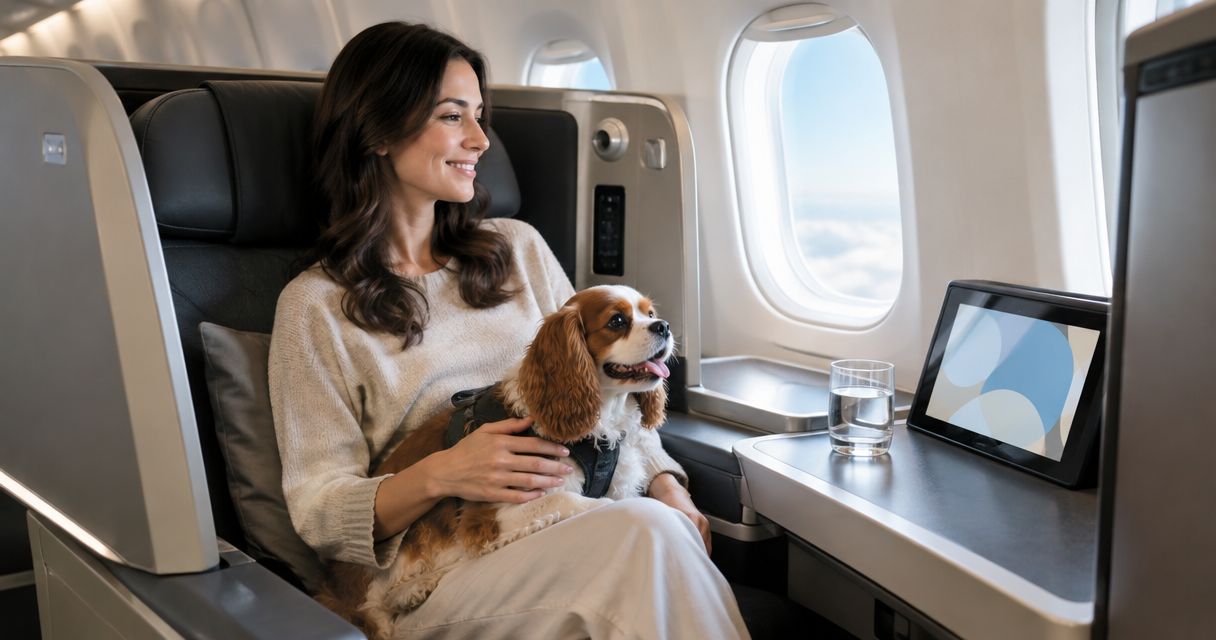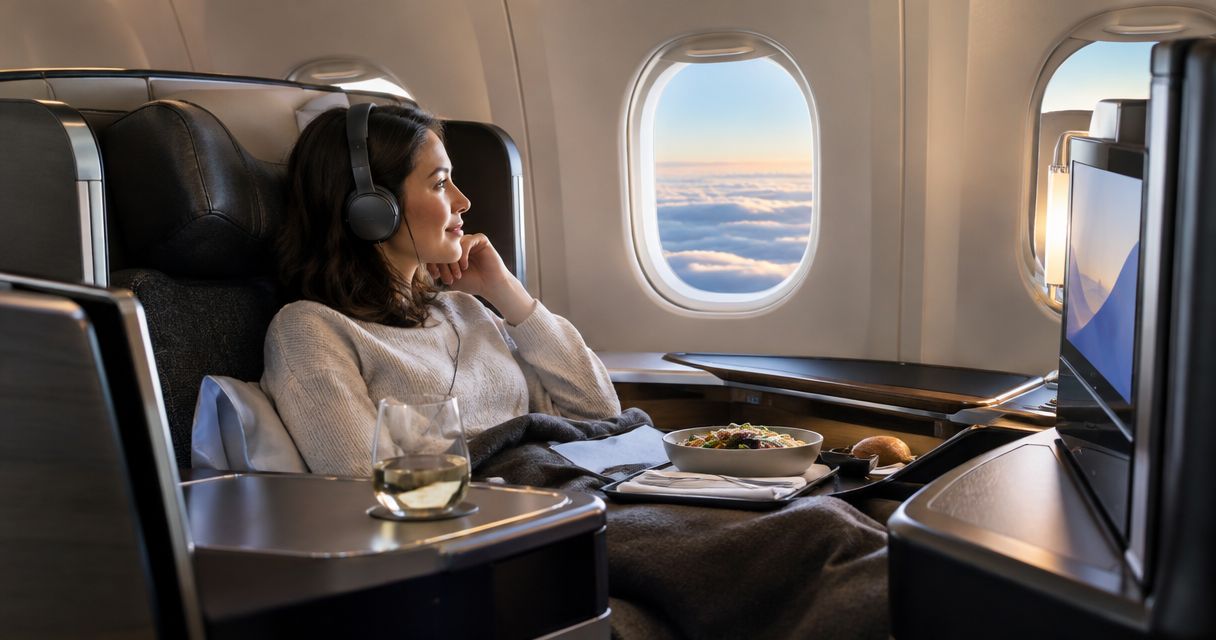
Business class is worth it on long-haul flights when a confirmed lie-flat seat, a useful sleep window and your plans after landing make rest a priority. For your 2026 trip, judge the actual aircraft and fare conditions—not just the cabin name—because business class does not guarantee a flat bed, uninterrupted sleep or flexible changes.
- Is business class worth it long haul? Yes when a confirmed lie-flat seat supports sleep you genuinely need.
- Premium economy deserves consideration when you want more space but do not need a flat bed.
- Compare every flight segment: the longest flight matters more than the cabin label on your booking.
- Global Business Flights suits premium travelers who prefer a dedicated consultant to self-service booking.
Is business class worth it on long-haul flights?
Business class earns its place when the seat solves a specific problem: sleeping overnight, resting before an important arrival or making a demanding journey more comfortable. The case is weaker when you expect to stay awake, have a relaxed arrival day or would rather put your travel budget toward the destination.
For help comparing premium fares, Global Business Flights arranges business and first class tickets through a dedicated travel consultant. You can discuss the journey and fare conditions rather than choosing from a self-service booking screen alone.
Use this comparison to identify which cabin deserves a closer look. These are cabin-level distinctions, not promises about a particular airline or aircraft.
| Cabin | Best for | Main benefit | Main limitation | What to verify |
|---|---|---|---|---|
| Economy | Travelers who prioritize the destination over onboard space | Keeps the cabin choice focused on essential transportation | Less personal space than premium cabins | Seat arrangement, baggage terms and connection details |
| Premium economy | Travelers who want more room without requiring a flat bed | More space than standard economy on aircraft with a dedicated premium economy cabin | Do not assume the seat converts into a bed | Whether the booking includes a distinct premium economy cabin |
| Business class | Travelers who prioritize overnight rest and personal space | A lie-flat seat, where offered, provides space to stretch out | Seat design and fare conditions vary | Exact aircraft, seat type and cabin on every segment |
For a 2026 booking, start with the operating airline and aircraft on the longest segment. A business class label on the itinerary does not explain every seat you will use.
Why this matters
A long flight is part of your trip, not separate from it. How you spend that time matters most when your arrival schedule leaves little room to recover.
Consider what you need to do after landing. A meeting, a family occasion and a quiet hotel afternoon place different demands on you; the same seat does not have equal value in every situation.
There is also a distinction between comfort and flexibility. A more comfortable cabin does not automatically come with more accommodating ticket rules. Evaluate the seat and the fare conditions separately before deciding whether the upgrade fits your trip.
Overnight flights: best for travelers who want to sleep
An overnight flight gives business class a clear purpose when the aircraft has lie-flat seats. You can stretch out rather than trying to rest upright, although the seat alone cannot ensure good sleep.
Look at the departure time, meal service and arrival time together. A late departure followed by an early arrival offers a different rest opportunity from a journey that overlaps with your normal waking hours.
Ask yourself whether you intend to sleep or enjoy the onboard service. Both are reasonable, but a long meal and extended entertainment reduce the time you leave for rest.
Choose business class for an overnight journey when lying flat is central to your decision. If the aircraft has a reclining seat rather than a flat bed, reassess the benefit before approving the fare.
Daytime flights: best for travelers who value personal space
On a daytime flight, business class is more about space, privacy and the way you want to spend the journey. Those benefits remain useful even when sleep is not your main goal.
The trade-off is straightforward: you are choosing comfort rather than solving an overnight sleeping problem. If you are content reading, watching a film or resting in a more upright seat, premium economy deserves a comparison.
For work, check the practical details rather than assuming the cabin provides an office. Seat layout, power access and the airline's stated connectivity features deserve attention if they affect your plans.
Choose business class for daytime travel when personal space matters enough on its own. Do not justify the decision with sleep benefits you do not expect to use.
Important arrivals: best for travelers with immediate commitments
Business class has a stronger purpose when you need to arrive ready for a demanding day. Think about your first commitment at the destination, not just the flight duration.
A corporate traveler heading into meetings has different priorities from a leisure traveler with an unplanned afternoon. Equally, a family celebration can make rest just as important as a business appointment.
The limitation is that cabin comfort cannot remove time-zone changes or make a difficult itinerary convenient. A useful arrival time and a sensible connection remain part of the decision.
For your 2026 itinerary, compare the whole journey before choosing the cabin. A better seat is a benefit; a workable schedule is still essential.
Why the value of business class varies
Business class is not a uniform experience. These factors explain why the same cabin category can feel worthwhile on one journey and unnecessary on another.
- Seat design: A lie-flat seat serves a different purpose from a reclining seat. Confirm the seat on the operating aircraft rather than relying on a cabin photograph from another route.
- Flight timing: An overnight journey creates a different opportunity for sleep from a daytime departure. Consider your usual sleeping hours alongside the local timetable.
- Arrival plans: Immediate commitments make rest more valuable to you. A flexible first day gives you another way to accommodate a tiring flight.
- Connection structure: A premium seat does not remove the effort of changing planes. Review the airport change, onward flight and total journey before deciding.
- Fare conditions: Changes, cancellation terms and ticket restrictions belong in the comparison. Do not treat the business class label as a substitute for reading them.
- Traveling party: Companions affect seating preferences and booking decisions. Confirm the cabin for each traveler and each segment rather than assuming the group has identical arrangements.
For 2026 travel, use these factors as a decision framework rather than looking for a universal rule. Your strongest reason to book should be something the quoted itinerary actually provides.
How to compare your fare options
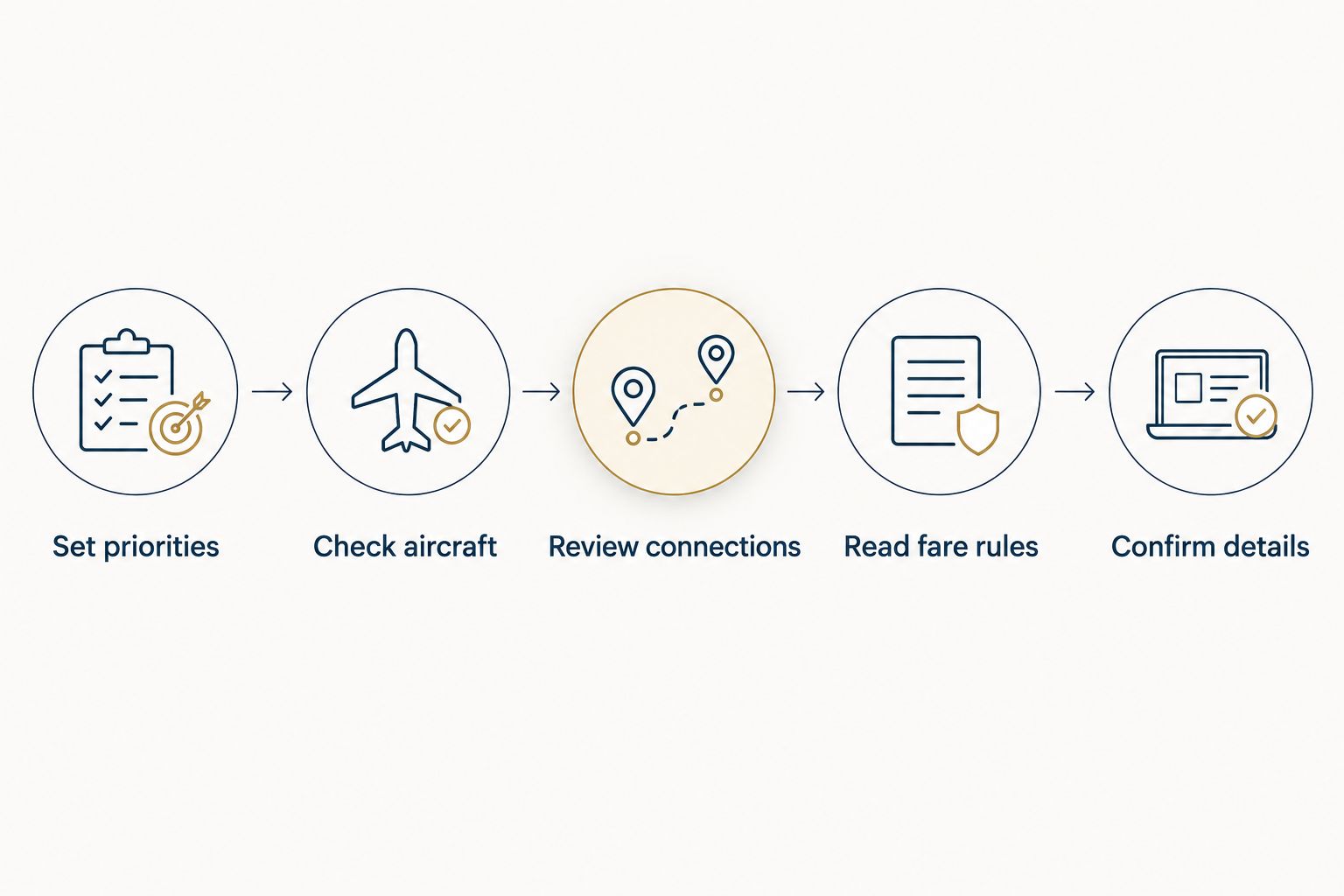
A clear request gives you a more useful comparison. Start with your travel priorities, then check whether the proposed flights meet them.
- Set priorities. State whether your main goal is overnight rest, personal space, a convenient schedule or flexibility. Separate essential requirements from preferences.
- Check aircraft. Ask for the operating airline, aircraft and seat type on the long-haul segment. Review connecting flights separately, especially on a mixed-cabin itinerary.
- Review connections. Look at the departure, transfer and arrival as a complete journey. A comfortable main flight does not settle whether the itinerary suits you.
- Read fare rules. Ask what happens if you change your plans or cancel. Request clear terms for the specific fare rather than relying on general descriptions of the cabin.
- Confirm details. Check passenger names, travel dates, cabin assignments and the agreed itinerary before ticketing. Review the issued e-ticket against those details afterward.
Global Business Flights provides support from quote to e-ticket, including multi-passenger bookings and managed corporate travel accounts. That approach suits travelers who want to discuss premium fare options with a dedicated consultant; travelers who prefer to select and complete everything themselves should recognize that it is not a self-service booking engine.
Explore your fare options
Discuss your itinerary, cabin preferences and fare conditions with a dedicated travel consultant.
Is premium economy enough for a long-haul flight?
Premium economy is enough when extra space meets your needs and lying flat is not essential. It is a distinct alternative to business class, not a substitute for every business class benefit.
Compare the actual cabins on your proposed aircraft. The premium economy name does not tell you everything about the seat, and business class should not win the comparison simply because it sounds more comfortable.
For a relaxed daytime trip, ask whether you would use the additional business class features. If your answer centers on a flat bed you do not intend to sleep in, reconsider which cabin best matches the journey.
Is business class worth it for a connecting itinerary?
Business class is worth considering on a connecting itinerary when the main flight provides the comfort you need and the transfers suit your plans. Check the cabin on every segment before making that judgment.
A mixed-cabin itinerary needs particular attention. The long-haul flight, rather than a short connecting leg, should deliver the seat that motivated your decision.
Compare the full routing against alternatives, including a nonstop flight where relevant. More time in transit is not automatically a good exchange for a premium cabin, especially when convenience is your main priority.
Should I book business class for both directions?
You do not need business class in both directions for it to be useful. Evaluate the outbound and return flights separately, then ask for fare options that match those priorities.
An overnight outbound flight before an important arrival can serve a different purpose from a daytime return with no immediate commitments. The reverse can also be true if you need to return ready for work or family responsibilities.
Do not assume that mixing cabins creates the most suitable ticket. Ask how the proposed combination affects the itinerary and fare conditions before choosing it.
FAQ
Is business class worth it on long-haul flights in 2026?
Business class is worth it when the confirmed seat and schedule support rest or personal space you genuinely need. For a 2026 booking, check the aircraft, cabin on each segment and fare conditions before deciding.
Does business class always have a lie-flat seat?
Business class does not always have a lie-flat seat. Confirm the seat type on the operating aircraft for your specific flight rather than relying on the cabin name.
Is premium economy better value than business class?
Premium economy is the better fit when extra space meets your needs and a flat bed is not essential. Business class deserves closer consideration when lying flat is a central reason for choosing a premium cabin.
Will I definitely sleep better in business class?
Business class does not guarantee better sleep. A lie-flat seat gives you room to stretch out, but flight timing, cabin activity and your own sleep habits still matter.
Can I book business class one way and economy the other?
Ask for a mixed-cabin itinerary if your priorities differ by direction. Check the proposed combination and its fare conditions before assuming it is the right fit.
Does a business class ticket include flexible changes?
A business class ticket does not automatically include flexible changes. Read the change and cancellation conditions for the specific fare before ticketing.
Can a travel consultant help compare business class flights?
A travel consultant can help you discuss routes, cabin preferences and fare options. Global Business Flights arranges premium airline tickets through a dedicated consultant, with support from quote to e-ticket.
One last thing
The most useful business class question is not whether the cabin is worth it in general. It is whether this seat, on this flight, supports the trip you want. Before approving your 2026 itinerary, ask the consultant to identify the seat type on the longest segment and explain the fare conditions separately.
That keeps the decision personal and practical. Choose the comfort you will use, with a schedule and ticket you understand.