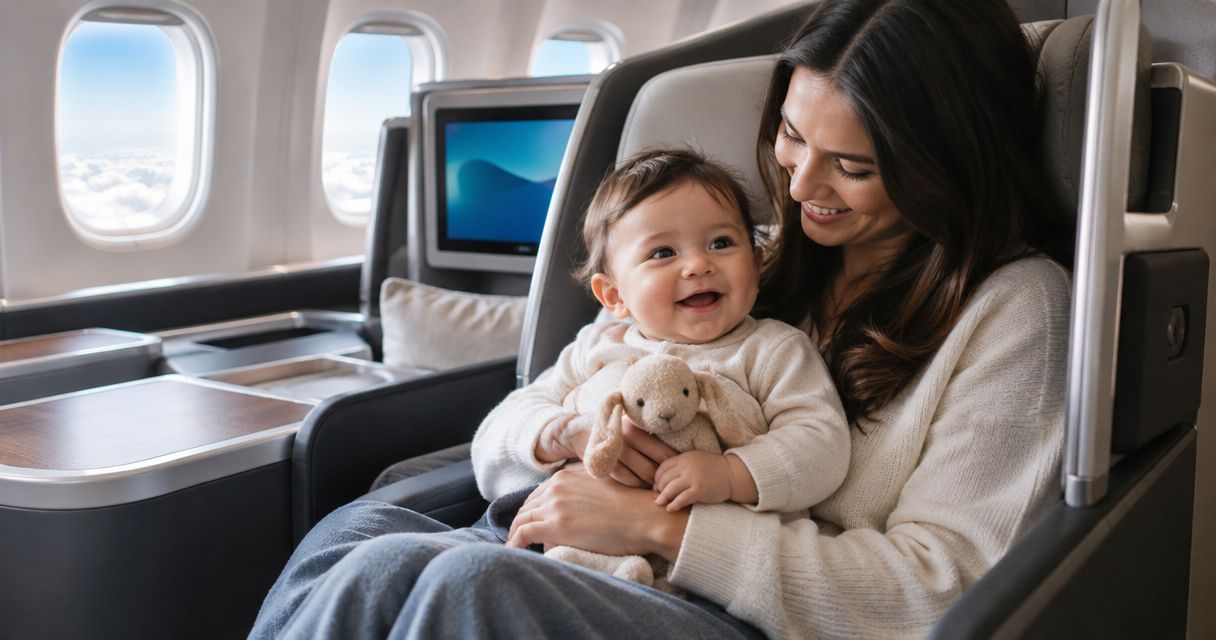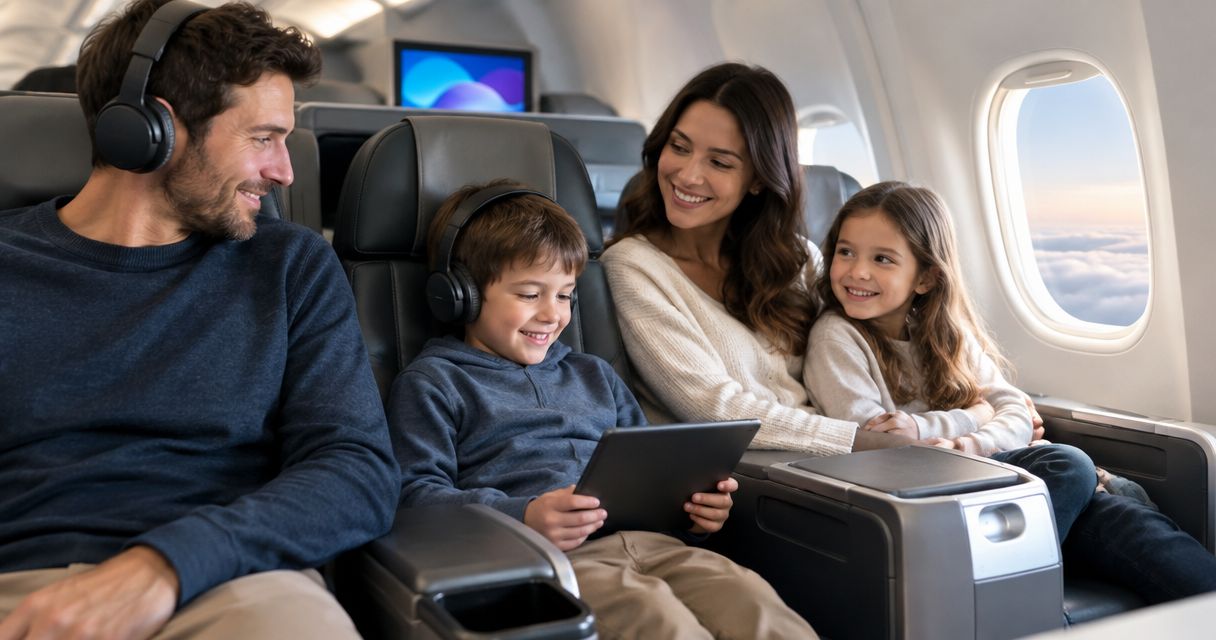
First class is worth it for a family trip when the specific cabin gives you meaningful rest, suitable seating together, and flexibility you expect to use. For a 2026 booking, choose the actual flight and fare conditions—not the cabin name—and check whether a less elevated cabin meets the same needs before committing.
- Is first class worth it for family trip planning? Yes, when rest and suitable family seating justify the upgrade.
- Compare first class with business class on the actual aircraft, not by cabin name alone.
- Confirm seat assignments, child-restraint compatibility, and change conditions before ticketing.
- Global Business Flights suits families who prefer a dedicated travel consultant to a self-service booking engine.
Why this matters
A premium seat is only useful if it fits the way your family travels. A parent supervising a young child needs something different from a teenager who wants to sleep independently. Privacy can be welcome for one traveler and inconvenient for another.
Global Business Flights is best for families who want a dedicated travel consultant rather than self-service booking. Through Global Business Flights, you can explore business and first class fare options with personal support from quote to e-ticket. The decision still starts with your family's seating needs, not an upgrade label.
For travel in 2026, compare the cabin shown for each flight in your proposed itinerary. Do not assume that every segment offers the same seat or experience.
Is first class worth it for a family trip?
First class earns its place when it solves a specific travel problem: sleeping comfortably, arriving ready for plans, or accommodating a family member's needs. It is harder to justify when the flight is short, your children need close supervision, or the alternative already provides the comfort you want.
Start with the comparison below. These are decision criteria, not promises about what any particular airline includes.
| Cabin option | Best for | Main advantage to assess | Main limitation to check |
|---|---|---|---|
| First class | Families prioritizing individual space and premium onboard comfort | Whether the actual seat and service improve the journey meaningfully | Separate seats or suites can make hands-on supervision less convenient |
| Business class | Families seeking rest without making first class the goal | Whether the specific flight provides suitable sleeping arrangements and nearby seating | Seat type and family-friendly layouts differ by aircraft |
| Economy or premium economy | Families whose priority is traveling together rather than added privacy | Whether adjacent seating and the scheduled flight meet the family's needs | The specific seat might not provide the rest or space you want |
Do not treat this as a universal cabin ranking. A convenient flight with suitable seats can serve your family better than a more elevated cabin on an awkward itinerary.
When first class makes sense
First class deserves a closer look when the journey itself is a substantial part of your trip. You might be crossing time zones, traveling overnight, or accompanying someone who values more personal space.
Ask what will actually change. Will the seat support the sleep you want? Can you comfortably help your child? Will you arrive at a useful time? A clear answer makes the decision easier than a long list of cabin features.
When to choose another cabin
Choose another cabin when first class does not improve your family's experience in a way you value. That includes situations where the seating arrangement separates a caregiver from a child or where business class already meets your rest requirements.
Do not trade a suitable family layout for a more impressive cabin name. The strongest choice is the one that works throughout the flight, including meals, sleep, and moments when a child needs help.
First class: best for space-focused families
First class is most relevant when individual comfort is central to the trip. Families with older children who are comfortable sitting independently can assess privacy differently from parents traveling with infants or young children.
The advantage is the opportunity to choose a cabin built around greater personal comfort. The limitation is that privacy does not automatically mean convenient caregiving. Check the layout and the airline's rules before deciding that a particular seat arrangement works.
Look beyond photographs. Ask where each family member would sit, how you would assist a child, and whether the proposed seats can be assigned before you commit. Treat any aircraft-specific feature as something to verify for the actual flight.
Business class: best for rest-focused families
Business class belongs in the comparison whenever your main goal is sleeping or arriving more comfortably. Where the proposed flight offers a suitable bed and workable family seating, first class needs to deliver an additional benefit you genuinely want.
The advantage is that business class can meet the central reason you considered upgrading. The limitation is variation: the cabin name alone does not establish the seat type, privacy, or ease of helping a child.
Compare the actual business class seat with the actual first class seat. If both meet your family's needs, use the schedule, fare conditions, and overall booking requirements to make the final choice.
Why the value of first class varies
The value of first class depends on your family and the proposed journey. Use these factors to separate useful comfort from features you will barely notice:
- Flight timing. An overnight departure puts different demands on your seats than a daytime flight. Consider when your children normally sleep and how the schedule fits.
- Children's independence. A child who needs frequent help requires a different seating arrangement from an older child who can manage independently.
- Actual seat layout. Check proximity, access, and the ability to supervise. A cabin photograph does not answer every practical question.
- Connection requirements. Assess the whole itinerary. A preferred cabin on the longest segment does not remove an inconvenient connection elsewhere.
- Fare conditions. Review change, cancellation, and refund terms. A premium cabin label does not establish those conditions.
- Your arrival plans. Consider whether your family has time to rest after landing or needs to be ready for activities. That helps define how much you value sleeping onboard.
For your 2026 trip, put the factors in your own order of importance. A family visiting relatives with a relaxed schedule can reach a different decision from a family arriving for a fixed event, even on the same flight.
How to compare family fare options
Ask for 2 comparable itineraries: one in first class and one in the alternative cabin you would genuinely book. Keep the route, travel dates, and traveler details consistent wherever possible. Otherwise, you are comparing different trips rather than the value of the cabin.
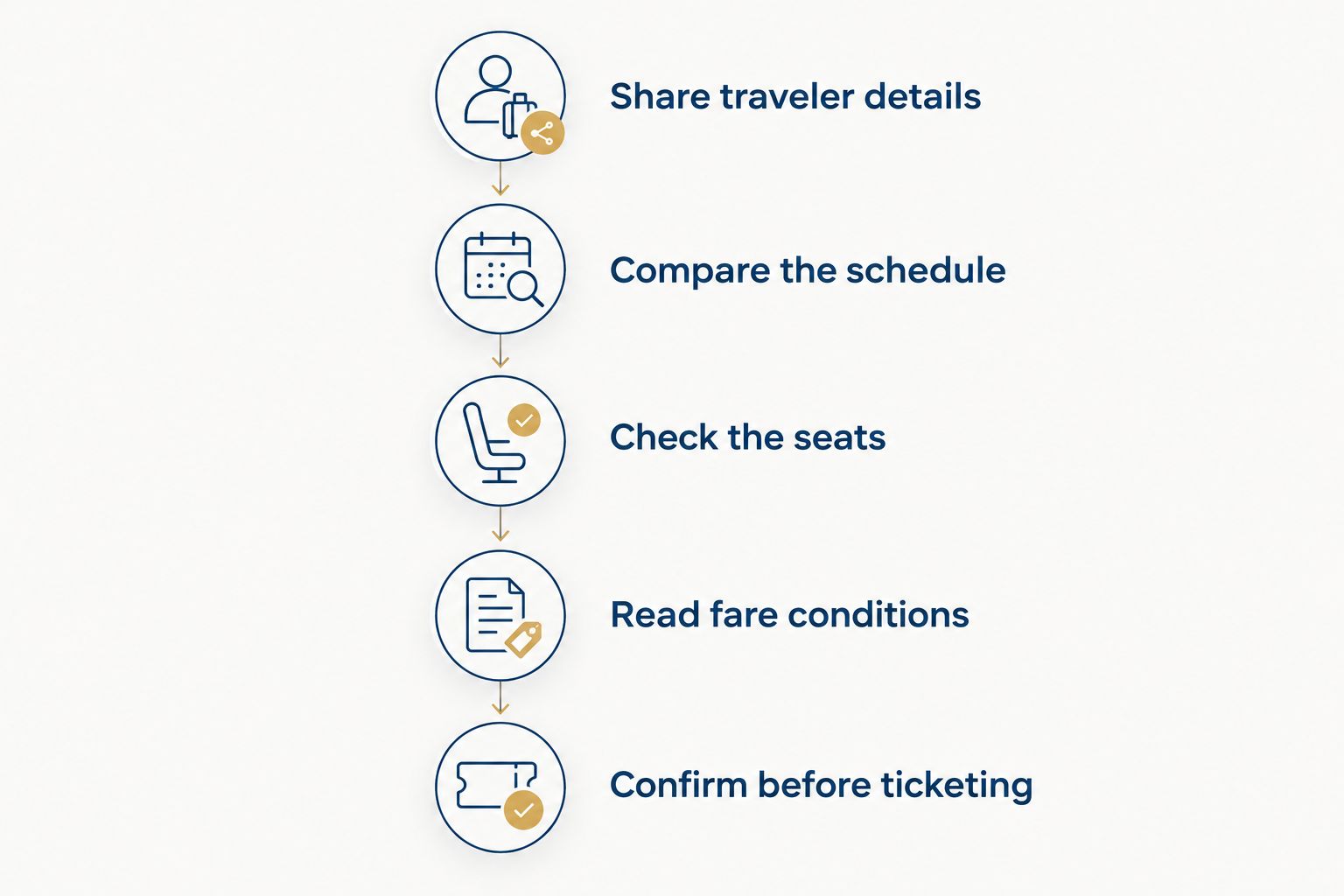
- Share traveler details. Provide each child's age, the number of travelers, and any assistance or seating requirements. Explain who needs to sit near whom.
- Compare the schedule. Review departure times, arrival times, connections, and the cabin on every segment. Identify any mixed-cabin itinerary.
- Check the seats. Ask about the aircraft, seat type, proposed assignments, and relevant child-restraint requirements. Confirm what is assigned rather than assuming it.
- Read fare conditions. Review changes, cancellations, refunds, baggage terms, and any restrictions attached to each proposed fare.
- Confirm before ticketing. Check passenger names, dates, airports, and the agreed itinerary. Resolve unanswered questions before authorizing the booking.
The comparison works best when each step answers a practical question. You should be able to explain what the preferred itinerary gives your family and what compromise you are accepting.
For a 2026 booking, keep the final itinerary and fare conditions together so you can review the same details throughout the booking process. A clear written comparison is more useful than remembering which option sounded most appealing on a call.
Global Business Flights arranges business and first class tickets through phone and online quote requests, with a dedicated travel consultant. That service fits travelers who want help comparing fare options; it is not a self-service booking engine. Share your family requirements at the quote stage so they form part of the discussion from the start.
Explore your family's fare options
Share your dates, traveler details, and seating needs with a dedicated travel consultant.
Is first class worth it with a baby or toddler?
First class is worth considering with a baby or toddler only when the proposed seating and airline rules support safe, practical caregiving. Extra privacy is not a substitute for being able to help your child comfortably.
Ask the operating airline about infant arrangements, approved child restraints, and any restrictions affecting the proposed seat. Check bassinet arrangements if relevant, but do not build your decision around an unconfirmed request.
The useful question is not whether the cabin welcomes families in general. It is whether your child's needs work with the exact seat and booking arrangement being proposed.
Is business class enough for a family overnight flight?
Business class is enough for a family overnight flight when the actual seats support the rest you want and the layout suits your family. First class needs to offer something beyond that to justify choosing it.
For an overnight journey in 2026, ask how each family member will settle, sleep, and receive help. Assess the sleeping arrangement for the child as carefully as the one for the adult.
Keep the rest of the itinerary in view. A comfortable long-haul seat does not resolve a difficult departure time or an inconvenient onward connection. Compare the journey from departure to arrival, not just the longest flight.
FAQ
Is first class worth it for a family vacation?
First class is worth it for a family vacation when its actual seating, comfort, and fare conditions meet needs that another cabin does not. Compare the specific flights and your children's supervision needs before deciding.
What's the best cabin for flying with young children?
The best cabin is the one with a suitable seating arrangement and rules that support your children's needs. Check caregiver proximity, child-restraint compatibility, and the actual seat layout rather than choosing by cabin name alone.
Will my family automatically sit together in first class?
Do not assume your family will automatically sit together in first class. Check the airline's family-seating rules and confirm the proposed seat assignments before ticketing.
Is first class always better than business class for families?
First class is not always better than business class for families. Business class can meet your rest requirements, while a different layout can make helping a child more practical; compare the actual aircraft and seats.
Does a first class ticket automatically let me change my flight?
A first class cabin label does not establish your change or refund rights. Read the conditions attached to the specific fare before you authorize the booking.
Can a travel consultant help compare family flight options?
A travel consultant can help you compare proposed itineraries and fare options around your family's requirements. Global Business Flights arranges business and first class bookings with a dedicated consultant and support from quote to e-ticket.
What should I include in a family flight quote request?
Include your travel dates, route, traveler count, children's ages, and seating or assistance needs. Explain which details are flexible and which are essential so the proposed itinerary addresses the right priorities.
One last thing
Before choosing your 2026 family itinerary, ask this question: Where will each person sit when a child needs help? It turns an appealing cabin description into a practical decision.
Then check the answer against the actual seat assignments and fare conditions. If first class improves both comfort and the way your family travels together, it has a clear purpose. If it does not, choose the cabin that does.