
Start looking once your destination and travel dates are clear, and book when the itinerary and fare conditions fit your trip—not when a fixed countdown says to act. For business class travel to Africa in 2026, check the connections, change conditions and operating flights alongside the fare; an early booking is not automatically a flexible booking.
- When to book business class to Africa depends on your travel dates, flexibility and itinerary—not a universal booking window.
- For fixed holidays or coordinated departures, review business class fare options as soon as your plans are clear.
- Compare connection details and change conditions before committing to a premium cabin itinerary.
- Globalbusinessflights suits travelers who want a dedicated consultant to arrange business class flights to Africa.
How far ahead should you book business class to Africa?
Begin with the trip's commitments rather than a prescribed number of months. A family departure tied to school holidays needs a different decision from a business visit whose meeting dates are still changing. The right booking point is when you can approve the journey and accept its conditions.
For personal help comparing those conditions, Globalbusinessflights arranges business and first class tickets through a dedicated travel consultant rather than a self-service booking engine. That approach suits travelers who want help moving from a quote to an e-ticket; it is not the same experience as completing the booking independently online.
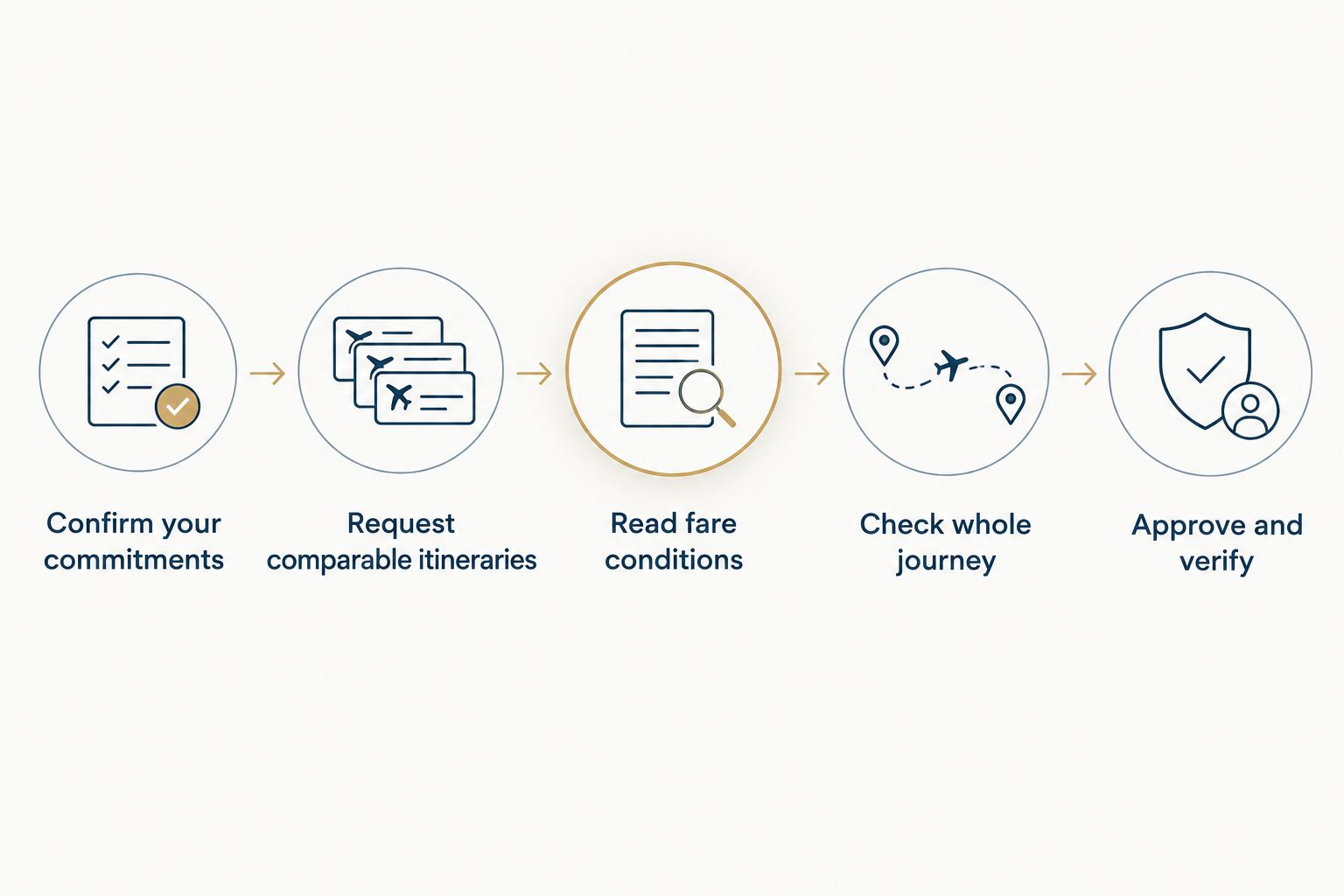
Use this sequence for your 2026 departure:
- Confirm your commitments. Establish the destination, departure airport and dates you cannot change. Include meetings, accommodation, tours and onward travel that determine when you need to arrive. Distinguish a preferred departure from a genuinely fixed requirement so you do not rule out a suitable itinerary unnecessarily.
- Request comparable itineraries. Give the same requirements for each option: passenger details, travel dates, destination and cabin expectations. Ask for the operating airline and cabin on every flight. Comparing different dates, airports or cabin combinations without noticing those differences makes the decision harder than it needs to be.
- Read the fare conditions. Review changes, cancellations, refunds and what happens if you miss the flight. Do not treat permission to change as a promise that changing will be free. Ask how a replacement flight would be priced under the proposed fare before you approve it.
- Check the whole journey. Look beyond the longest flight. Review connection airports, arrival times, the onward segment and any airport transfer. A comfortable long-haul cabin does not resolve an inconvenient arrival or a connection that does not suit your needs.
- Approve and verify. Once the itinerary meets your requirements, confirm the passenger names and booking conditions before authorizing ticketing. After ticketing, review the e-ticket against the agreed journey. Keep the itinerary and relevant conditions together so you can refer to them if your plans change.
The sequence matters more than the calendar. Research can begin while you are planning; ticketing requires a decision about the actual journey and its restrictions.
Why this matters
Booking business class to Africa is a journey decision, not just a departure-date decision. The destination airport, connecting flights and arrival schedule all belong in the comparison. Start with the experience you need on arrival: time to reach your hotel, attend a meeting or continue your holiday.
For a 2026 trip, make those needs explicit before comparing quotes. You will have a clearer basis for deciding whether to book, adjust your dates or ask for a different routing. A fare is only a useful option when the itinerary works for you.
Match your booking approach to your trip
There is no single approach that serves every traveler. Use the table to identify what should drive your decision, then review the actual fare conditions before committing.
| Travel situation | Best for | Main advantage | Main limitation | Booking decision |
|---|---|---|---|---|
| Fixed-date holiday | Travelers with confirmed leave or scheduled activities | You can assess itineraries against clear requirements | Changing the trip means revisiting linked arrangements | Review options once the essential dates are confirmed |
| Flexible leisure trip | Travelers who can change dates or routing | You can compare alternative journeys | The comparison requires flexibility in the wider trip | Request alternatives before choosing a departure |
| Corporate visit | Travelers working around meetings or approval rules | You can select against business requirements | An unsettled meeting schedule complicates commitment | Confirm approvals and acceptable change conditions |
| Multi-passenger trip | Families and colleagues traveling together | You can coordinate the journey as a group | Individual needs can narrow the shared choices | Request a coordinated quote once the group's requirements are clear |
These are planning approaches, not promises of a particular fare. The strongest choice is the one whose advantages matter to your trip and whose limitations you accept.
Fixed-date holidays: begin with confirmed commitments
For a fixed-date holiday, start reviewing flights when your essential arrangements are clear. That includes a departure you cannot move, an organized itinerary or accommodation that determines your arrival date. Ask for the flight schedule that supports those arrangements rather than choosing the flight in isolation.
The advantage is clarity: you know what the journey must accomplish. The limitation is reduced room to adjust. Before booking, check whether an arrival-day connection or ground transfer leaves you comfortable with the plan, and understand the flight's conditions if another part of the holiday changes.
For Christmas 2026 or another date-specific trip, use the same method. A holiday label is not a substitute for checking the actual itinerary and terms.
Flexible leisure trips: compare before choosing
For flexible leisure travel, compare acceptable dates and routings before committing to one departure. Tell your consultant which details can change and which cannot. Flexibility about the departure day does not necessarily mean flexibility about arrival time, connection length or destination airport.
This approach gives you more journeys to consider, but it also requires a clear stopping point. Decide what makes an itinerary suitable: a manageable connection, the requested cabin and an arrival that fits your plans. Once an option satisfies those requirements, evaluate it on its own merits rather than waiting for an unspecified perfect booking moment.
Corporate trips: align timing with approval
For corporate travel, confirm the meeting schedule and booking authority before approving a ticket. Give your consultant the required arrival time, preferred return and any company requirements. State whether the trip needs personal approval, company approval or coordination with other travelers.
A settled schedule makes comparison straightforward. An unsettled schedule makes fare conditions more important, not less. Ask how changes would be handled under the proposed ticket and what information you would need to provide.
For a 2026 corporate itinerary, keep the approval process separate from the fare's flexibility. Permission from your company to change a trip does not determine the airline ticket's conditions.
Why the right booking time varies
Your booking decision changes with the requirements you bring to the quote. Use these factors to explain what matters before an itinerary is proposed:
- Date flexibility. Identify fixed dates and acceptable alternatives. Without that distinction, a useful alternative can look unsuitable—or the reverse.
- Arrival requirements. A meeting, tour departure or onward arrangement determines which arrival schedules work. Share the required arrival date, not just the preferred departure.
- Routing preferences. State whether connections are acceptable and identify any airport or transfer constraints. Review each proposed routing individually.
- Passenger coordination. Multi-passenger bookings require agreement on dates, routing and individual needs. Settle those requirements before authorizing the group itinerary.
- Fare flexibility. Changes and cancellations must be assessed against the specific conditions. A business class cabin does not, by itself, establish refundability.
- Corporate approval. A booking cannot be treated as ready for ticketing while required authorization remains unresolved. Explain the approval steps when requesting the quote.
None of these factors produces a universal month to book. Together, they tell you whether an itinerary is ready for a confident decision.
Should you wait for a business class sale to Africa?
Do not make an unannounced sale the foundation of a fixed-date trip. Compare the fare options presented against your actual requirements and decide whether the proposed journey is acceptable. Waiting is a choice to keep the booking unresolved, not a booking strategy with a guaranteed result.
If your dates are flexible, ask for alternative departures instead of focusing exclusively on a future promotion. Keep the cabin, connection details and fare conditions visible in that comparison so you understand what changes between options.
Is it better to book early or choose a flexible fare?
Booking early and choosing a flexible fare solve different problems. Timing determines when you commit; fare conditions determine what that commitment allows you to change. Neither replaces the other.
If your plans are unsettled, ask for a clear explanation of the proposed ticket's change and cancellation conditions. Do not assume that a premium cabin ticket includes the flexibility your trip requires.
Should you book connecting flights at the same time?
Assess the complete route before approving any part of the journey. Ask whether the proposed flights form one ticket or separate tickets, and request an explanation of what that means for your connection and any disruption.
Do not assume that flights shown together have identical conditions. Check the operating airline, cabin, baggage arrangements and connection details for each segment, particularly when the journey continues beyond the main arrival airport.
What to include in your quote request
A clear request gives your consultant a useful starting point. For your 2026 business class trip to Africa, provide the details below before comparing itineraries:
- Departure and destination. Name the airports you prefer and identify alternatives you would consider. Include onward flights that form part of the trip.
- Travel dates. Separate fixed requirements from preferences. Explain any arrival deadline or return commitment that affects the schedule.
- Passengers. State who needs to travel together and share relevant passenger requirements. Use names exactly as shown in the travel documents when approving ticketing.
- Cabin expectations. Confirm the requested cabin throughout the journey. Ask for clarification wherever a proposed segment differs from that request.
- Change requirements. Explain whether meetings, leave or other arrangements remain unsettled. Ask which fare conditions address those uncertainties.
- Booking authority. Identify who can approve the itinerary and any company process that must be completed before ticketing.
You do not need to know the ideal routing before asking. You do need to explain what a successful journey looks like, including the compromises you would rather avoid.
Explore your fare options
Share your dates and travel preferences with a dedicated travel consultant.
FAQ
What's the best time to book business class to Africa in 2026?
Start reviewing flights once your destination and travel dates are clear, then book when the itinerary and fare conditions meet your needs. A universal month-based rule does not account for your route, commitments or required flexibility.
Should I book business class before confirming my holiday plans?
Confirm the commitments that determine your flight dates before approving a ticket. You can request options during planning, but review change and cancellation conditions before making a commitment.
Does booking business class early make the ticket refundable?
No, booking early does not make a ticket refundable. Refundability depends on the specific fare conditions, which you should review before approving ticketing.
Can a travel consultant help me compare different dates?
A travel consultant can help you compare proposed itineraries against your travel requirements. Globalbusinessflights works through dedicated consultants, so explain which dates and routing preferences you can adjust.
What should I check on a connecting business class itinerary?
Check the operating airline, cabin, connection airport, arrival schedule and ticket arrangement for every segment. Ask for clarification before approving any itinerary with separate tickets or a cabin difference.
When should a family request business class flight options?
Request coordinated options once the family's essential dates and travel requirements are clear. Include everyone who needs to travel together and review the complete proposed journey before approving it.
Can I book business class to Africa through a self-service engine here?
Globalbusinessflights operates through phone and online quote requests rather than a self-service booking engine. A dedicated travel consultant supports the booking from quote to e-ticket.
One last thing
Your arrival requirement can be more useful than your preferred departure date. Start by telling your consultant when you need to be at your destination and what happens next. Then work backward through the flights, connections and departure choices.
That keeps the booking decision centered on the journey you need—not an arbitrary countdown or a cabin label alone.