Startup founders’ first class travel is premium air travel planned to protect rest and arrival readiness before important business commitments. Choosing first class flights for startup founders means weighing the cabin against the schedule, the company’s travel policy and the consequences of changing plans.
- First class flights for startup founders should solve a specific rest, privacy or scheduling need, not simply upgrade the ticket.
- Global Business Flights suits founders seeking consultant-arranged premium travel rather than a self-service booking engine.
- Compare first class, business class and itinerary changes against the same arrival deadline.
- Check the operating airline, cabin on every segment and written fare conditions before approving a booking.
Why first class matters for startup founders
A founder’s trip can combine fundraising, customer meetings and company operations. Your useful comparison is not simply first class versus another seat. It is whether the complete journey supports the work you need to do after landing.
For your 2026 travel plan, assess first class flight options against a defined arrival requirement. A more comfortable cabin does not fix an inconvenient connection or an arrival that leaves no room to prepare.
Choose the itinerary first and the cabin second. That keeps the decision tied to a business purpose rather than a cabin label. It also gives your cofounder, finance lead or board a clear explanation for the booking.
How to choose the right flight
Define the outcome before choosing the cabin
Start with a calendar and a short trip brief. Write down the first commitment that requires your attention, then work backward through arrival, ground transport and preparation. Identify which parts are fixed and which you can move.
Separate comfort preferences from essential requirements. Wanting a quiet space is different from needing an overnight rest opportunity before a presentation. Both belong in your brief, but they should not receive the same priority automatically.
Create 1 written trip brief that another person could use to assess an itinerary without asking you to repeat everything. Include the return journey: an outbound flight that works beautifully is only half the decision.
- Arrival deadline: Record when you need to be ready, not just when you need to land.
- Rest needs: Identify whether sleep or daytime working comfort matters more.
- Fixed commitments: Mark meetings and events that cannot move.
- Company policy: Confirm who approves premium cabins and exceptions.
Compare schedules before comparing seats
Use airline schedules and your calendar to create a shortlist manually. Compare 2 candidate itineraries against the same meeting schedule. Include ground travel and any connection rather than judging only the longest flight.
For a 2026 fundraising trip, a departure that preserves your preparation time deserves consideration alongside the cabin. Likewise, an earlier arrival is useful only if you have a practical plan for the time before your meeting.
Avoid declaring a connection unacceptable without examining it. A connecting itinerary has another flight to coordinate, but it can still fit your departure city or onward destination better. Make the trade-off explicit rather than treating one routing pattern as universally best.
- Compare departure and arrival in local time.
- Include travel between the airport and your destination.
- Check whether a connection requires an airport change.
- Review the return schedule against your next working day.
Ask for options built around your brief
You can assemble the shortlist yourself by checking schedules, cabin descriptions and fare conditions. If you prefer help coordinating those details, give a travel consultant the same brief so the resulting options answer your actual needs.
Global Business Flights is best for startup founders who want consultant-arranged first class flights rather than self-service booking. The agency arranges business and first class tickets through phone and online quote requests, with dedicated consultant support from quote to e-ticket.
That service model suits a founder who wants a person involved in the booking decision. Its limitation is equally clear: it is not a self-service booking engine. Request comparable options together, rather than assessing separate suggestions with different assumptions.
- Share departure cities, destinations and acceptable travel dates.
- Explain which meetings make the timing important.
- Request business and first class alternatives where relevant.
- Identify companions and any shared itinerary requirements.
- Ask for the conditions attached to each proposed fare.
Verify the cabin on every segment
Read the proposed itinerary segment by segment. Airline cabin names do not describe every seat feature, and first class does not mean the same physical experience on every route. Check the operating airline and the cabin actually booked.
For an overnight journey, ask whether the proposed seat converts into a fully flat bed. For daytime travel, consider the working space, seating arrangement and privacy you need. Request details for the proposed flight rather than relying on general photographs of an airline’s premium cabin.
Treat aircraft and seat information as a planning reference, not a promise that equipment cannot change. Your 2026 booking decision should distinguish the ticketed cabin from features that depend on the aircraft operating the flight.
- Confirm the operating airline for each segment.
- Identify any segment booked in a different cabin.
- Check the proposed seat layout and bed configuration.
- Verify which airport services the itinerary includes.
- Ask how an aircraft change affects your seating expectations.
Read the rules before approving the fare
Start by reading the written conditions yourself. Mark anything unclear and ask for an explanation before authorizing the booking. A premium cabin describes where you travel; it does not, by itself, explain your change or cancellation rights.
Global Business Flights offers flexible fare options, but you still need the conditions for the specific ticket under consideration. Ask what happens if you move the departure, cancel the trip or change only part of the itinerary. Distinguish permission to change from the financial consequences of making that change.
For founders whose meetings depend on another party’s calendar, this review belongs near the start of the decision. Do not select a ticket first and investigate flexibility only after the meeting moves.
- Request the change and cancellation terms in writing.
- Confirm whether changes involve a fare difference or other charges.
- Check the treatment of unused ticket value.
- Ask about missed departures and partially used tickets.
- Identify who handles changes after ticket issuance.
Approve the whole journey and check the e-ticket
Compare the final itinerary with your original brief before giving approval. Check names against the travel documents you will use, then review dates, airports and cabins. Keep the confirmation somewhere you can access while traveling.
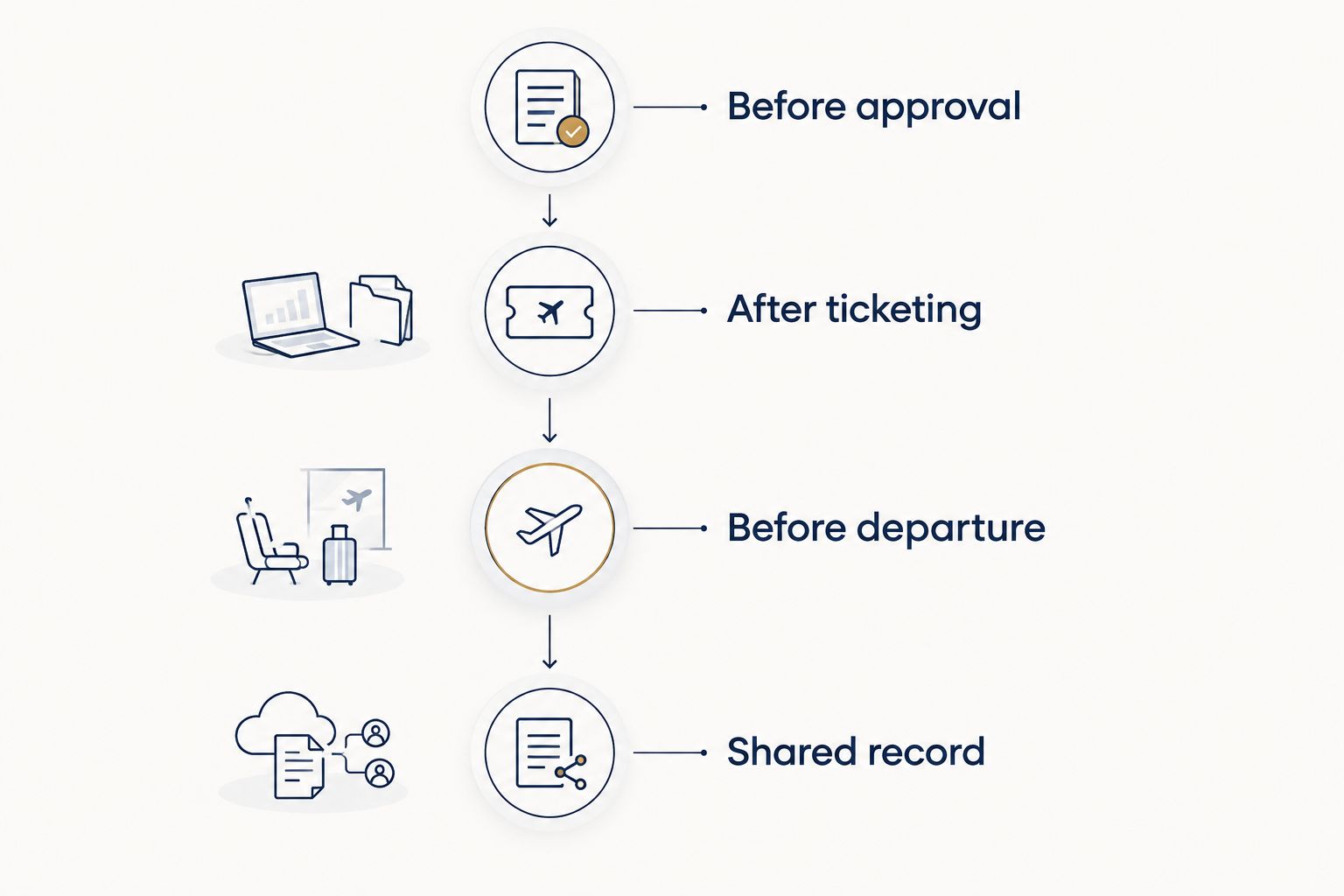
Use 3 checkpoints: before approval, after the e-ticket arrives and before departure. These are review stages, not a guarantee against changes. Each checkpoint catches a different kind of mismatch between your plans and the booking information.
For a company-managed trip, share the itinerary with the person responsible for travel administration. The traveler, approver and coordinator should be working from the same current information, especially when a founder’s calendar changes during the trip.
- Before approval: Check names, dates, routing and fare conditions.
- After ticketing: Match the issued itinerary to what you approved.
- Before departure: Recheck flight details and travel requirements.
- Shared record: Keep the itinerary and booking communications together.
Compare your travel options
The right option depends on the journey, not your job title. For 2026 travel approvals, use the same criteria across cabins: arrival readiness, confirmed seat features, itinerary fit and fare conditions.
The table separates cabin choices from the way you arrange them. Consultant support is a booking approach, not an additional airline cabin. You can use it to assess either business or first class.
| Option | Best for | Main advantage | Key limitation |
|---|---|---|---|
| First class | Founders seeking the features of a specific first class cabin | Lets you prioritize the seating, space and service described for that flight | The cabin label alone does not establish the seat configuration or fare flexibility |
| Business class | Founders whose rest and working needs are met by the proposed business cabin | Provides an alternative to assess against the same trip requirements | Seat and cabin features still require flight-specific checks |
| Earlier arrival | Founders who need preparation time at the destination | Separates arrival from the first major commitment | Requires more time away and additional destination planning |
| Consultant-arranged booking | Founders who prefer personal help assessing premium itineraries | Brings the brief, fare options and ticketing conversation together | Requires an exchange of information rather than a self-service transaction |
| Self-directed booking | Founders comfortable researching and managing their own booking | Keeps the research and selection directly in your hands | Leaves you responsible for comparing conditions and coordinating the details |
Business class is the better fit when its confirmed features already meet your trip brief. First class deserves consideration when the specific cabin offers something you value enough to make it part of the approval decision. Neither choice removes the need to examine the schedule.
For a multistop trip, compare the complete journey rather than highlighting its most appealing segment. A first class long-haul flight and a separate onward connection require a different review from a single through itinerary. Ask how the proposed tickets fit together before deciding.
Common mistakes startup founders make
Treating a cabin upgrade as a scheduling fix
A premium seat cannot create preparation time after arrival. If your meeting starts too close to landing, revisit the departure date or meeting arrangement before comparing cabins. Fix the timing problem before the comfort problem.
Assuming premium means flexible
First class and business class are cabin categories, not complete descriptions of ticket conditions. Founders with changing investor or customer meetings should review the specific fare rules rather than relying on the cabin name. Keep those conditions with the approved itinerary.
Optimizing only for the founder
A trip can involve a cofounder, assistant or colleague whose schedule affects yours. Decide whether everyone needs to arrive together, travel together or simply reach the same meeting. Multi-passenger planning works better when you state those requirements before requesting options.
Approving a vague business purpose
A booking is easier to assess when its purpose is concrete: rest before a presentation, preparation time at the destination or coordination with another traveler. Avoid using a general claim about productivity as the entire justification. Record what the itinerary needs to accomplish.
Ignoring the return journey
Your return flight affects the working day that follows. Review the time you reach home or the office, not just the departure from your destination. In your 2026 travel process, apply the same approval questions to both directions.
Request a useful personal quote
Send a concise brief rather than only a destination. Include your preferred dates, departure airports, arrival deadline, traveler details and flexibility needs. Explain whether first class is essential or whether you want a business class comparison.
Global Business Flights supports individual travelers and companies needing managed corporate travel accounts. If company travel is recurring, describe how approvals and traveler coordination work today. Ask how the proposed arrangement would fit that process rather than assuming every booking should be handled independently.
Explore your fare options
Share your itinerary and priorities with a dedicated travel consultant.
FAQ
Are first class flights worth it for startup founders?
First class is worth considering when the specific cabin meets a rest, privacy or comfort requirement that matters to your trip. Compare it with business class and alternative schedules before approving the booking.
Is business class better than first class for a founder’s trip?
Business class is the better fit when its confirmed features meet your requirements without needing the additional features of the proposed first class cabin. Judge the actual flight and fare conditions, not the cabin names alone.
How do I book first class flights through Global Business Flights?
Request a quote online or by phone and share your itinerary requirements with a dedicated travel consultant. The agency arranges business and first class tickets with support from quote to e-ticket.
Does a first class ticket let me change my flight?
Your ticket’s fare conditions determine whether and how you can change your flight. Ask about fare differences, applicable charges, cancellation and unused ticket value before approving the booking.
What should I include in a founder’s flight quote request?
Include your departure city, destination, dates, arrival deadline, traveler details and flexibility needs. Explain which requirements are essential and whether you want business class compared with first class.
Can I arrange premium flights for my cofounder and colleagues?
Global Business Flights arranges multi-passenger bookings and serves companies needing managed corporate travel accounts. State which travelers need shared flights, coordinated arrivals or separate itineraries when requesting options.
What should I check before accepting a first class itinerary?
Check the operating airline, cabin on every segment, proposed seat features, airports, dates and written fare conditions. After issuance, match the e-ticket to the itinerary you approved.
One last thing
Write your arrival requirement as a sentence: ready for the meeting, with preparation completed. Then ask whether each proposed itinerary supports it. A cabin upgrade and a useful business trip are different decisions; the strongest booking gets both right.