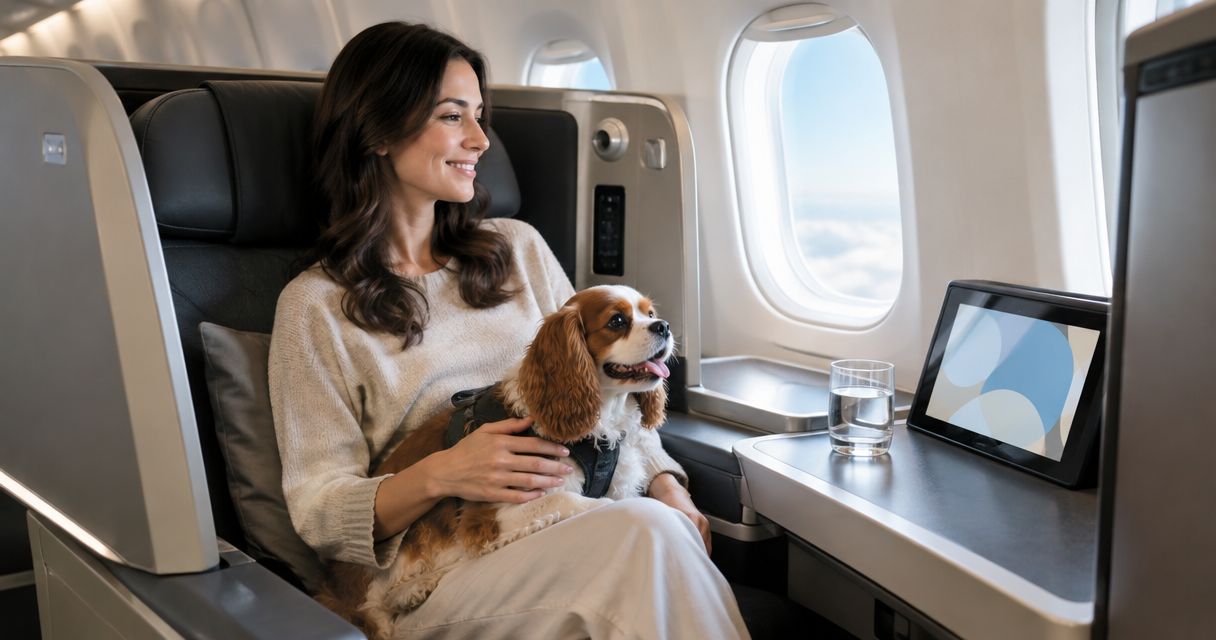
Best overall for a U.S.-origin trip to Australia in 2026: Qantas, when a nonstop flight fits your itinerary. Best for a Singapore stopover: Singapore Airlines; best for suite-style privacy: Qatar Airways on a confirmed Qsuite flight.
- For the best business class airlines to Australia 2026 shortlist, start with Qantas when nonstop routing fits.
- Choose Singapore Airlines for a Singapore stopover, or Qatar Airways when Qsuite privacy justifies the routing.
- United suits U.S. domestic connections; Air New Zealand suits trips that include New Zealand.
- Compare the operating aircraft, connecting flights and fare conditions before choosing your business class ticket.
Why this matters
A comfortable seat matters, but so does the journey around it. An additional connection can turn a strong cabin choice into a less appealing itinerary, particularly when you have limited vacation time or a meeting after arrival.
For your 2026 trip, compare the complete journey rather than the airline name alone. Departure airport, Australian destination, connection time and the operating aircraft all belong in the same decision.
Globalbusinessflights is best for travelers who want a dedicated consultant to arrange business class flights to Australia. The agency serves leisure and corporate travelers, with support from the initial quote through to the e-ticket.
What makes the best business class airline to Australia?
- Route fit: Favor an itinerary that serves your actual destination without an unnecessary detour.
- Sleeping comfort: Check for a fully flat bed on the long-haul flight, not simply a business class label.
- Seat access: Direct aisle access avoids climbing over another passenger during the flight.
- Connection quality: Compare airports, terminal changes and the time between flights.
- Cabin consistency: Confirm the seat assigned to each segment; airline brands cover different aircraft and cabins.
- Fare flexibility: Read the change, cancellation and no-show conditions before authorizing ticketing.
No airline wins every category. The strongest choice is the itinerary that meets your comfort needs without adding complications you do not want.
Best business class airlines at a glance
| Airline | Best for | Standout feature | Key limitation |
|---|---|---|---|
| Qantas | Nonstop travel between the U.S. and Australia | Business Suite on its long-haul Boeing 787 and Airbus A380 | Nonstop usefulness depends on your departure and arrival cities |
| Singapore Airlines | A Singapore stopover | Long-haul business cabins with fully flat beds | Routing through Singapore adds distance to a U.S.–Australia trip |
| Qatar Airways | Travelers prioritizing privacy | Qsuite on selected aircraft | Qsuite is not fitted to every aircraft; Doha routing is indirect from the U.S. |
| United Airlines | Combining a U.S. domestic flight with the Pacific crossing | Polaris business class on long-haul services | Domestic connecting flights do not necessarily offer the Polaris experience |
| Air New Zealand | Combining Australia with New Zealand | Business Premier on long-haul aircraft | An Auckland connection adds a stop if Australia is your only destination |
1. Qantas: best business class airline for nonstop travel
Qantas is the default starting point when you want to travel directly between the U.S. and Australia. Its Business Suite provides a fully flat bed and direct aisle access on the Boeing 787 and Airbus A380.
Qantas's published cabin layouts show 42 business class seats on the Boeing 787-9 and 70 on the Airbus A380. Those figures describe the cabins, not a promise about which aircraft will operate your flight.
Why Qantas leads this shortlist
A nonstop flight removes the connection from your long-haul journey. That is a practical advantage when your priority is arriving in Australia rather than adding a stopover elsewhere.
For a 2026 booking, start with the destination and flight schedule, then inspect the aircraft and seat map. Do not choose an inconvenient arrival city solely to fly a preferred aircraft.
Qantas pros:
- Nonstop U.S.–Australia itineraries avoid an intermediate international connection.
- Business Suite provides direct aisle access on the aircraft above.
- An Australian domestic connection can be incorporated when needed.
Qantas cons:
- A domestic positioning flight can reduce the simplicity of a nonstop crossing.
- A connecting Australian flight can have a different seat and cabin experience.
Best for: Travelers whose U.S. departure point and Australian destination align with a Qantas nonstop.
Verdict: Buy for route simplicity, after confirming the operating aircraft and fare rules.
2. Singapore Airlines: best for a Singapore stopover
Singapore Airlines is a strong choice when Singapore is part of the trip rather than simply an airport connection. Its long-haul business class offers fully flat beds, although seat designs differ between aircraft.
The airline's Airbus A380 configuration includes 78 business class seats on the upper deck. That cabin is not a description of every Singapore Airlines flight, so compare the actual aircraft on both sides of your connection.
Choose the stopover deliberately
From the U.S., Singapore is an indirect route to Australia. The reason to choose it is a journey that benefits from time in Singapore, not an assumption that a well-regarded airline automatically creates the best itinerary.
Ask whether your onward flight has the seat you expect. A familiar airline name does not make every segment identical.
Singapore Airlines pros:
- A Singapore stopover can become a purposeful part of your vacation or business trip.
- Long-haul business cabins provide fully flat beds.
- Aircraft-specific cabin information lets you compare the individual flights.
Singapore Airlines cons:
- Singapore routing adds distance compared with a nonstop Pacific crossing.
- Different aircraft can mean different seats across the itinerary.
Best for: Travelers who want to combine Australia with Singapore.
Verdict: Buy when the Singapore stopover adds value to your trip; skip the detour when arrival time matters most.
3. Qatar Airways: best for confirmed Qsuite privacy
Qatar Airways belongs on the shortlist when a private-feeling seat matters more than the shortest routing. Qsuite has a sliding door and configurable seating on selected aircraft, but the airline does not operate Qsuite on every flight.
For a U.S.–Australia journey, routing through Doha is indirect. Treat that as a deliberate trade-off, not a minor detail hidden behind the cabin photographs.
Confirm the product, not just the airline
A Qatar Airways business class ticket is not, by itself, confirmation of Qsuite. Inspect the operating aircraft and seat map for each long-haul segment, and recognize that an aircraft substitution can change the cabin.
The published seat layout is useful when traveling with a partner, too. Choose the configuration that suits how you want to spend the flight, rather than assuming every neighboring pair works alike.
Qatar Airways pros:
- Qsuite provides a sliding door on equipped aircraft.
- Different seating arrangements accommodate solo travelers and companions.
- A Doha stopover can suit a trip that already includes the region.
Qatar Airways cons:
- Qsuite is not universal across the fleet.
- Doha is a substantial routing detour for a U.S.–Australia journey.
Best for: Travelers willing to accept indirect routing for a confirmed Qsuite itinerary.
Verdict: Buy only when the cabin and total journey both suit you; skip a major detour for the airline name alone.
4. United Airlines: best for a U.S. domestic connection
United Airlines deserves a close look when your journey begins beyond a U.S. international gateway. A domestic connection followed by a United long-haul flight can keep the itinerary within one airline's network.
United Polaris business class provides a fully flat seat on its long-haul aircraft. The important distinction is between the Pacific crossing and the domestic flight that gets you there.
Inspect the journey segment by segment
Do not expect a domestic premium cabin to match the long-haul Polaris cabin. Check the seat, cabin label and connection for each flight before treating the itinerary as one uniform experience.
A useful United itinerary is one that connects your home airport with your Australian destination sensibly. Network convenience should serve your schedule, not replace scrutiny of it.
United Airlines pros:
- Its U.S. network supports domestic connections to international departures.
- Polaris offers a fully flat seat for the long-haul portion.
- One airline's flights can cover both the domestic connection and Pacific crossing.
United Airlines cons:
- Domestic connecting flights do not necessarily provide a flat bed.
- A tight or inconvenient connection can outweigh the benefit of staying with one airline.
Best for: Travelers connecting from a U.S. city without a suitable nonstop to Australia.
Verdict: Buy when the domestic connection and Polaris crossing create the most practical complete itinerary.
5. Air New Zealand: best for an Australia–New Zealand trip
Air New Zealand is the natural comparison when your trip includes both Australia and New Zealand. Its long-haul Business Premier cabin provides a fully flat bed, with the seat design depending on the operating aircraft.
For an Australia-only trip, connecting through Auckland adds a stop. For a two-country itinerary, that same routing can support the trip you actually want.
Match the cabin to the flight
Business Premier is a cabin name, not a guarantee of one seat design across every aircraft. Examine the long-haul seat map and the separate trans-Tasman flight details.
Consider the order of your destinations before comparing tickets. Visiting New Zealand first and Australia second is a different itinerary from connecting immediately through Auckland.
Air New Zealand pros:
- Auckland routing fits a journey that includes New Zealand.
- Long-haul Business Premier provides a fully flat bed.
- An intentional stopover gives the connection a purpose beyond changing planes.
Air New Zealand cons:
- Auckland adds a connection when Australia is your only destination.
- Seat design and the onward cabin require separate checks.
Best for: Travelers planning meaningful time in both countries.
Verdict: Buy for a two-country trip; skip the extra connection when a suitable nonstop meets your needs.
How to compare your fare options
For a 2026 departure, give your consultant your preferred travel dates, departure airport, Australian destination and acceptable alternatives. Include every passenger and say whether sitting together, sleeping privately or minimizing connections matters most.
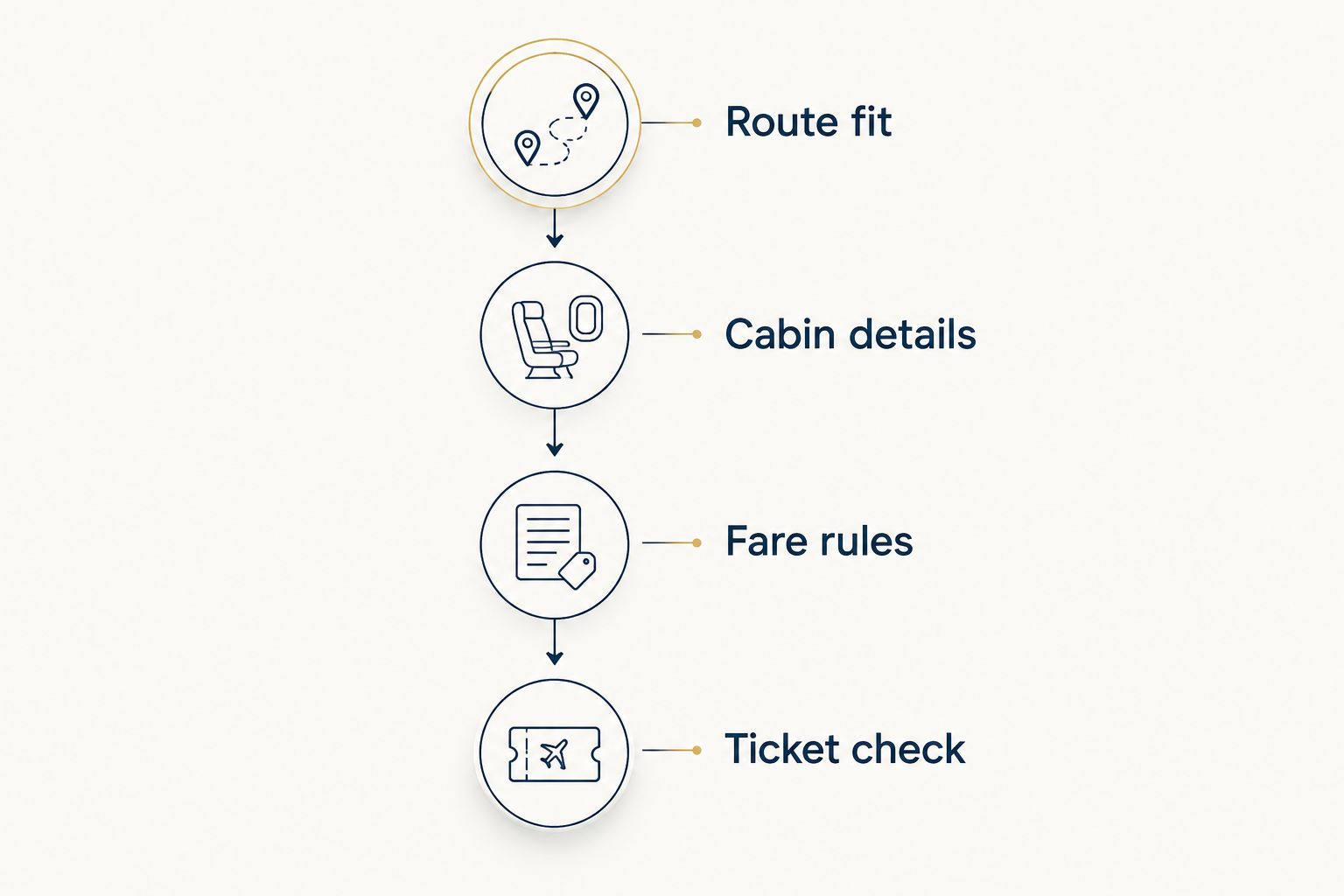
Compare the proposals in this order:
- Route fit: Check every airport, connection and arrival date.
- Cabin details: Confirm the operating airline, aircraft and seat for each flight.
- Fare rules: Review changes, cancellations and no-show conditions.
- Ticket check: Verify passenger names and itinerary details before authorizing ticketing.
Globalbusinessflights arranges business and first class tickets through phone and online quote requests rather than a self-service booking engine. A dedicated travel consultant supports the process from quote to e-ticket, including multi-passenger bookings and fare options.
Explore your fare options
Share your dates, destination and cabin preferences with a dedicated travel consultant.
How the airlines rank
This 2026 shortlist prioritizes route fit, sleeping comfort, seat access, connection quality and clarity about the operating cabin. The order favors a straightforward U.S.–Australia journey first, then distinct reasons to choose an alternative.
It is not a ranking of every seat, meal or lounge. The recommendation changes when your departure city, stopover plans or preferred aircraft changes.
Which business class airline should you choose?
Start with Qantas when a nonstop fits. Compare United when your U.S. domestic connection determines the journey, Singapore Airlines when you want Singapore, Qatar Airways when confirmed Qsuite privacy justifies the detour, and Air New Zealand when both countries are on your itinerary.
For your 2026 trip, ask Globalbusinessflights to compare complete itineraries rather than airline names alone. The right recommendation should explain both the comfort benefit and the routing compromise.
FAQ
What's the best business class airline to Australia in 2026?
Qantas is the default choice when a nonstop U.S.–Australia flight fits your itinerary. United, Singapore Airlines, Qatar Airways and Air New Zealand serve different connection, privacy and stopover priorities.
Is Qantas better than United for business class to Australia?
Qantas is the stronger fit when its nonstop avoids a connection; United is worth comparing when a U.S. domestic flight shapes your journey. Check the operating aircraft and complete schedule before choosing.
Does Qatar Airways always have Qsuite to Australia?
No. Qsuite is fitted to selected aircraft, so confirm the cabin on each flight rather than relying on the airline name. Aircraft substitutions can change the seat product.
Is Singapore Airlines a good choice from the U.S. to Australia?
Singapore Airlines is a good fit when you want a Singapore stopover. It is an indirect route from the U.S., so compare the extra travel with the value of visiting Singapore.
Should I fly through Auckland to reach Australia?
Choose Auckland routing when New Zealand is part of your trip or the complete itinerary suits your needs. For an Australia-only journey, compare the additional connection against a suitable nonstop.
Does every business class flight have a flat bed?
No. A long-haul business class ticket can include a connecting segment with a different seat. Confirm the cabin and seat separately for every flight.
Can a travel consultant arrange tickets for several passengers?
Globalbusinessflights arranges multi-passenger bookings through a dedicated travel consultant. Provide all travelers' dates, destination and seating priorities when requesting your personal quote.
One last thing
A business class ticket can contain a flight that does not have a bed. Before approving your itinerary, read every segment's cabin description—not just the headline attached to the longest flight.
That final check keeps your expectations aligned with the journey you are booking.